Texas A&M testifies on new state NIL bill in House Higher Education Committee
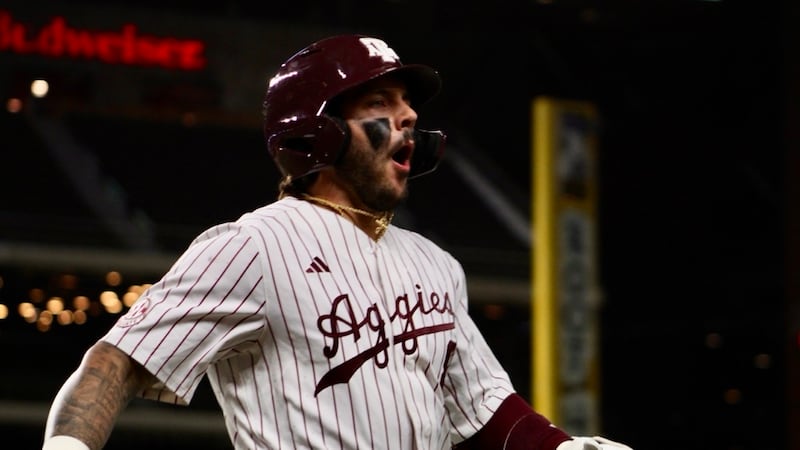
(KBTX) - A new bill in Texas over name, image, and likeness (NIL) had its day in committee Tuesday, with a representative from Texas A&M called as an expert witness.
Texas A&M University System attorney Brooks Moore spoke on how House Bill 126, filed by Rep. Carl Tepper (R- District 84), will prevent universities in the state from falling behind in recruiting by enabling athletic departments to offer NIL deals to prospective athletes.
“Institutions in other states would be permitted to enter into NIL deals directly with student-athletes, which could be a great advantage to the student-athletes,” Moore said during the meeting. “If Texas institutions can’t do that and the other institutions in other states can, then they may be able to recruit athletes that Texas institutions cannot.”
If approved, the settlement in the House v. NCAA antitrust case opens the door nationally for schools to pay current athletes for their name, image, and likeness appearing in broadcasts of games, up to a $20.5 million cap per year. Monday, a settlement between the NCAA and the attorneys general of Tennessee and Virginia was approved in a separate lawsuit that challenged the NCAA’s rules on negotiating NIL deals with recruits. Now, universities can have NIL deals in place for prospective athletes, who will begin earning compensation when they enroll in the school.
The current NIL bill in Texas, HB 2804 - which passed in 2023- does not allow universities to directly pay athletes in NIL deals and prohibits athletes from earning NIL compensation while participating in designated team events. It also prevents NIL deals used as inducement for perspective athletes. All of these provisions are removed from HB 126, clearing the way for House settlement revenue sharing and using NIL deals in recruitment.
“Without revising the law, institutions will be caught between the state law and what, kind of, is permitted otherwise,” explained Moore. “Of course, our institutions will follow the state law. So, it could be a competitive disadvantage for state institutions.”
An approval hearing for the House settlement is scheduled for April 7 in the US District Court for the Northern District of California.
HB 126 is the second draft of NIL-related legislation filed by Rep. Tepper in this legislative session. HB 2330 was initially filed as the updated NIL bill, but after consultation with more athletic department stakeholders around the state, HB 126 took its place.
Texas A&M officials worked with other universities in the state, as well as Tepper’s office, to provide information for the updated filing, A&M athletic director Trev Alberts told KBTX in February.
The key difference between the two pieces of legislation is a section that prevents the state from having to pass a new NIL bill every legislative session to keep up with changing NCAA rules and court orders.
“If there is a conflict, the institutions or entities or individuals could follow the more permissive standard, but the caveat is; if they do so, they are going to be subject to whatever rules have been adopted by the NCAA, by conferences or other entities with authority of athletics,” Moore said during the meeting.
Texas Tech Vice Chancellor and General Counsel Eric Bentley testified alongside Moore during the meeting.
“We love our March Madness, but that would take on a different meaning if we’re not able to compete with other institutions across the country,” shared Bentley, referencing the bill.
During the meeting, Rep. Stan Lambert (R- District 71) asked both attorneys how Title IX might affect House settlement revenue sharing, a point that has little clarity at the federal level.
Days before the departure of President Joe Biden’s administration, the Department of Education’s Office of Civil Rights issued Title IX guidance that said all NIL compensation was financial aid and, therefore, bound by Title IX law. That guidance was rescinded in February under President Donald Trump’s administration.
Title IX’s authority over the House settlement could still be taken to court after the settlement is approved.
“It’s a great question and I don’t think there’s a solid answer for that right now,” Bentley said in response to Lamber’s question. “I can tell you what Texas Tech is doing: What Texas Tech is planning on doing is distributing it according to the revenue that the sports brought in for the previous year and so, that would be women’s sports as well.”
A&M has yet to announce how it will share revenue or add scholarships among its athletic programs.
The bill was left as “pending” in the committee. Should it pass committee, it would need votes by both chambers of the legislature and the signature of the governor to become law. Since 2021, when NIL compensation was legalized across the country, NIL bills related to college athletes in Texas have become law without much issue.
What remains an issue is the moving goalposts in the attempts to regulate NIL compensation.
“I think it’s important to note that the NCAA issues with paying athletes is still not shaken out,” added Tepper. “I think we all thought it would, after three or four years of this and it’s still not settled. And I think even this court case that’s about to be settled is not going to completely settle it.”
Copyright 2025 KBTX. All rights reserved.