Former Texas A&M cornerback claims he was ‘abandoned’ after 2019 hamstring tear
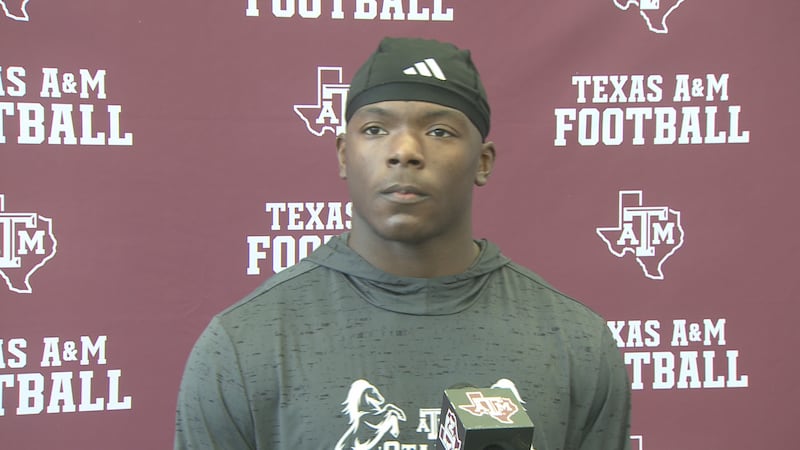
COLLEGE STATION, Texas (KBTX) - Former Texas A&M cornerback Elijah Blades claimed he was “abandoned” on the A&M practice fields after suffering a torn hamstring during practice in 2019, according to a civil complaint filed against the NCAA and power conferences challenging their amateur model.
According to the complaint, Blades said coaches and teammates “left him alone on the practice field because they were disappointed with his perceived ineffective play after he injured himself.” Blades then claimed he “hobbled” 800 yards to the football facilities through rain and mud.
After the gravity of his injury was revealed, he received no apology from the university, coaching staff, or teammates, according to the complaint.
“The incident illustrates how athletes operated in a harsh system that demanded peak performance, yet were offered only limited and controlling rewards,” the court document said.
The accusation was a part of a newly filed complaint for the Fontenot v. NCAA antitrust lawsuit filed in the United States District Court in the District of Colorado that challenges the NCAA’s amateur model and pay-for-play restraints. It is a somewhat parallel case to House v. NCAA, which awaits settlement approval on April 7 for damages in lost name, image, and likeness (NIL) compensation for athletes on roster beginning in 2016.
Neither A&M nor any members of the A&M athletic department or coaching staff at the time were directly named as defendants in the case.
Blades played in seven games for the Aggies as a freshman in 2019, registering 15 tackles and three pass break ups. He went on to play three games at Florida before finishing his career at Buffalo in 2022.
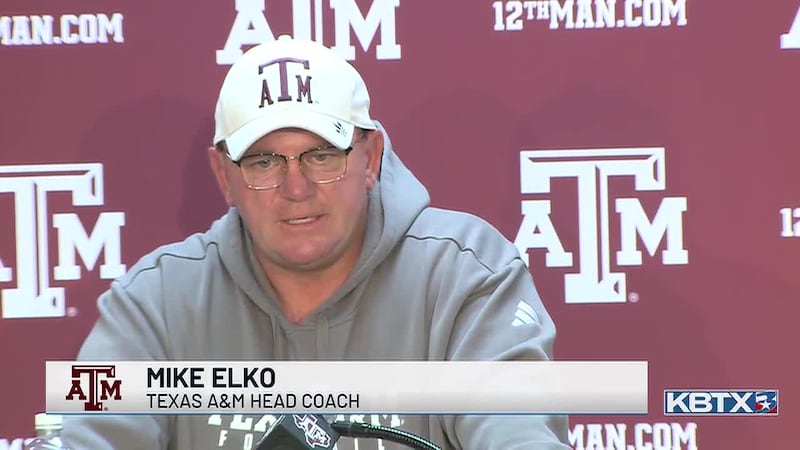
Current A&M head coach Mike Elko served as the defensive coordinator at the time of the alleged incident, while also coaching safeties. Jimbo Fisher was the Aggies head coach at the time. KBTX requested a comment from Elko on the allegations and was provided with a statement from Alan Cannon, executive associate athletic director for external operations.
“Since this is a legal proceeding Texas A&M will not have any comment,” the statement read. “I can say the health and well-being of our Aggie student-athletes is paramount.”
Requests for comment on the lawsuit by Blades were directed to his legal counsel, who did not respond to a request for an interview.
When an attorney signs a court document, they are attesting to the accuracy and truth of everything they file and could be subject to sanctions, Sam C. Ehrlich, an assistant professor of legal studies at Boise State University who tracks legal cases in college sports, said, speaking generally.
“Claims and complaints, especially, are generally going to be – you take them with a little bit of a grain of salt, but they are generally going to be seen as accurate, or at least the attorney’s best attempts at getting accurate information,” said Ehrlich.
Garett Broshuis of the Korein Tillery law firm is the lead attorney on the complaint. In 2023, Broshuis represented former and current minor league baseball players in a $185 million wage-and-hour settlement with the Office of the Commissioner of Baseball.
This new filing in the Fontenot case, made this Monday on March 24, lists 292 plaintiffs, including seven former A&M athletes: Baseball pitcher Asa Lacy, football offensive lineman Carson Green, football offensive lineman Colton Prater, football offensive lineman Jared Hocker, football offensive lineman Keaton Sutherland, basketball forward Kevin Marfo, and Blades.
Blades’ statement was the only one from a former A&M athlete who made allegations against the A&M athletic department for issues other than compensation.
All seven of these athletes have chosen to opt out of the House settlement, which would have prohibited them from raising a separate suit on the issue. It also precludes them from any payments that could be made from the House settlement.
The individual complaints for the other six A&M athletes in the document are similar: Offering examples of their value to the university and to potential third-party NIL partners.
In Lacy’s case, the 789-page document states, “Defendants’ conspiracy greatly harmed Mr. Lacy. It prevented him from enjoying the benefit of bargaining for competitive remuneration and benefits in an open market… Mr. Lacy received only a partial scholarship due to the NCAA’s baseball scholarship bylaws. That collusive, artificial restraint greatly harmed Mr. Lacy. It prevented him from enjoying the benefit of bargaining for scholarship money in a competitive environment."
Ehrlich said movement in Fontenot is reliant upon a decision in the House case.
Should the House settlement be approved, most of Fontenot’s claims against the NCAA’s amateur model will be canceled out and the case will move forward as a means for the athletes who opted out of the House settlement to get damages, Ehrlich explained.
“If the House settlement is not approved, if it is rejected, then Fontenot would be there to, kind of, pick up the pieces and try to convince the court to essentially disband all the NCAA prohibitions on pay-for-play,” Ehrlich added.
Copyright 2025 KBTX. All rights reserved.