Scammers preying on compassion through fake missing person posts on social media
BRYAN-COLLEGE STATION, Texas (KBTX) - In the age of social media, finding missing persons has become more efficient, but it has also given rise to a new kind of scam. A growing number of fake missing person posts on social media are exploiting the public’s goodwill, causing significant concern among experts.
A fake missing person scam involves individuals falsely reporting someone as missing to garner attention, sympathy or financial gain. These scams typically occur online and may involve creating fake social media posts or crowdfunding campaigns to solicit donations. Experts say these fake posts often have comments disabled, and once enough people share the hoax, the scammers will swap out the image for something else.
The scams exploit the goodwill of the public and can divert resources from genuine cases, causing emotional and financial harm to those who donate or share the false information. The fake posts can also have a negative impact on the families of those involved. Law enforcement agencies and online platforms often warn against such scams and advise verifying the authenticity of missing person reports before taking action.
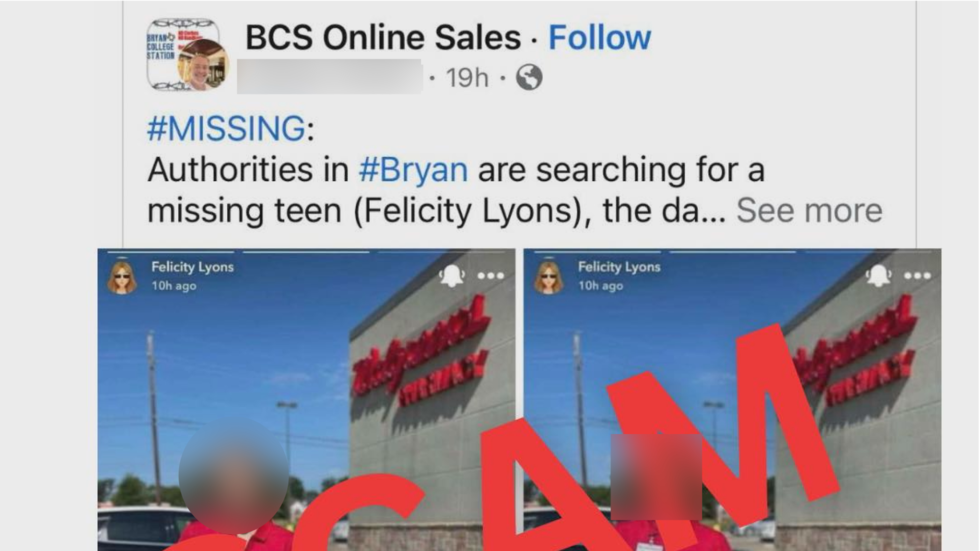
Angeline Hartmann, director of communications at the National Center for Missing & Exploited Children (NCMEC) and Chuck Fleeger, executive director of the Amber Alert Network Brazos Valley, say these scams have lasting repercussions.
“These scams are targeting people who want to help. They tug at people’s heartstrings. I mean, who doesn’t want to help when there’s a missing child in your community? Right?” asked Hartmann. “I think this scam is one that touches everybody because most people, when they see a missing child, they want to help. And a lot of times, they automatically share what they’re seeing online. That’s what we don’t want to happen.”

Hartmann highlighted the need for caution before sharing posts on social media.
“We’re asking people to be careful, check out the posts, make sure it comes from a legitimate source, and check to see if the comments are turned on or off. If they’re turned off, it’s likely that this is a scam,” said Hartmann. “Make sure that there’s a call to action. Is there a number attached to this? Is there appropriate legitimate information about the child, where the child was missing, the child’s name? All of that information. A lot of times, people just see the picture, and it says missing, and then they forward it to their family and friends, and it just keeps going on and on and on. And it’s so easy to target people this way.”
Fleeger noted the harmful effect of these scams on genuine missing person cases.
“It undercuts the public perception of the credibility and urgency of a missing person, missing children flyers that they see on the internet because then they’re wondering, well, is this another scam? We rely very heavily upon our social media platforms as a means to distribute information about local missing children and adults to our communities,” said Fleeger. “When you have those fictitious ones, unfortunately, the scammers realize that will tug at the heartstrings of people in our community, people who genuinely care and want to do something to help. What that does is it may caution people about sharing legitimate posts when that’s the assistance that we really need is in helping to spread the word.”
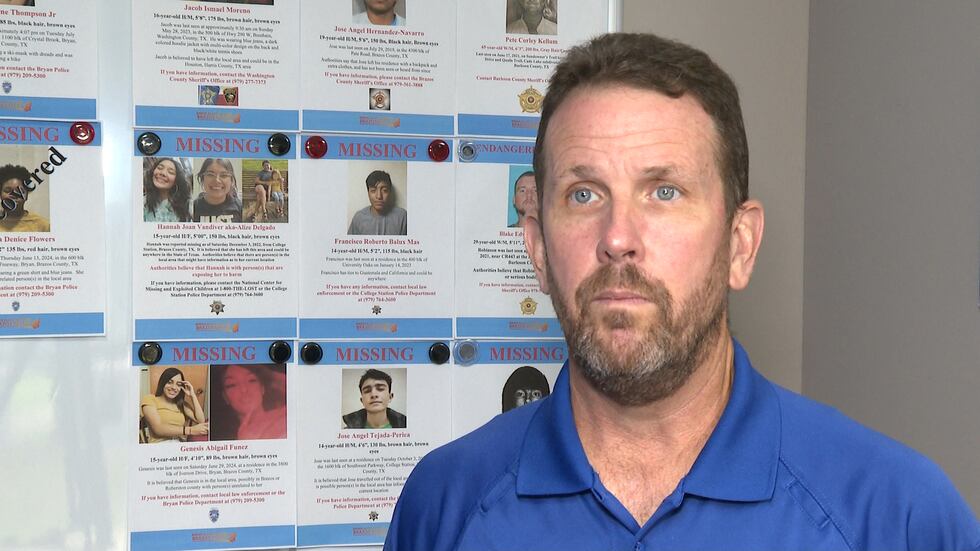
Hartmann added, “You know, social media has been a game changer when it comes to finding missing children. So, we need social media. It’s a great way to reach the public and it helps people get involved, but people have to be careful.”
To identify legitimate posts, Hartmann advised looking for information from reputable sources like NCMEC or law enforcement agencies.
“When people see a missing poster online, they should make sure that it comes from a legitimate source. Is it the National Center for Missing and Exploited Children? Is it a law enforcement agency or another legitimate organization? If it just comes from social media, they should back-check and figure out where this came from originally. Sure, you may have received the information from your friend, but what do the actual posts say?” asked Hartmann.
Fleeger added, “For all the ills and the pitfalls in the social media world, and there are some, it is incredibly effective in distributing information rapidly to an engaged community. And so things that go against its effectiveness and its reach certainly hurt efforts of organizations like ours, like the National Center for Missing and Exploited Children and other legitimate hardworking nonprofits that support issues related to missing children and adults.”
Hartmann and Fleeger also stressed the urgency of reporting missing children immediately.
“If your child is missing, contact authorities right away. There’s no waiting period,” she urged.
As social media continues to play a crucial role in locating missing persons, experts say it’s important to remain vigilant and verify information before sharing to combat these scams.
Additional Resources
Copyright 2024 KBTX. All rights reserved.