How poor vision could be impacting students’ reading skills
As myopia rates surge in children, Georgia lawmakers push vision screening bill.
ATLANTA, Ga. (InvestigateTV) — Knowing how to read is vital to everyday life whether you’re at work, home, or in school.
In classrooms across the country, a growing number of children struggle with learning this critical skill. Part of the reason could be because they can’t see clearly.
Lawmakers in Georgia are considering legislation that would significantly expand vision screenings for public school students.
The move comes as vision impairment in children continues to rise, a statistic potentially linked to increased screen time and a crisis that directly impacts the state’s literacy rates.
State Rep. Kim Schofield said she plans to file The Georgia Student Vision and Literacy Readiness Act, which would require more frequent vision screenings in schools and provide funding to help families who cannot afford glasses and other vision services.
Currently, most Georgia children receive screenings only in kindergarten.
“Children need to be able to read and their vision is crucial,” said Schofield, a Democrat who filed the bill. “It will not only raise awareness, but it will also offer a corrective action plan that we can do now.
“Let’s face it; if children cannot read, they can’t succeed.”
The push comes as vision impairment in children continues to rise. According to a 2024 study published in the British Journal of Ophthalmology, short-sightedness, or myopia, in children from 1990 and 2023 rose to 36%.
New research published in the Journal of the American Medical Association suggests screentime is likely playing a part, citing “a meaningful association between higher screen time and higher odds of myopia in children.”
Access gap in rural Georgia
Georgia’s vision care landscape presents significant challenges. According to research by Emory Eye Center, 52 counties in Georgia — most of them in rural areas — have few, if any, optometrists.
Georgia’s uninsured rate is third highest in the United States at 13.7%, with the rate potentially climbing to more than 25% in rural Georgia by 2026.
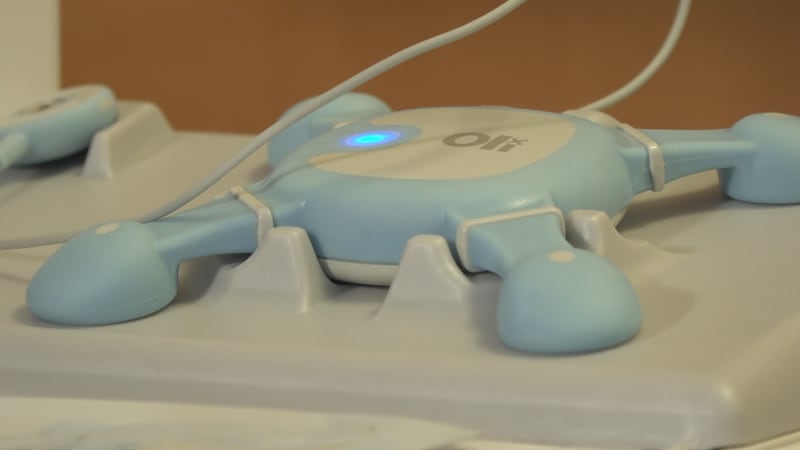
Dr. Lindsay Marshburn, an optometrist with the Georgia Lions Lighthouse Foundation, which provides free vision screenings in underserved schools, said the problem is widespread.
“We go to schools every single week and there are hundreds of kids who fail this screening; 30%, 40%, 50% of kids are failing,” Marshburn said. “A lot of them have never even had an eye exam or have never had glasses or have glasses that are broken.”
Teachers are often surprised by the results.
“They’re always like, ‘I knew something was wrong,’” Marshburn said. ”I hear that all the time; ‘I feel like something was going on’ or ‘We just couldn’t figure it out.’
“A lot of times teachers or parents think it’s a behavioral issue, but it’s not. They just can’t see.”
Connection to literacy concerns
The legislation directly addresses what Schofield sees as a link between vision impairment and Georgia’s literacy crisis.
About 70% of Georgia 4th graders cannot read proficiently, according to state assessments.
Schofield’s proposed bill would require vision screenings at kindergarten and grades one, three, five, seven, and 10. It would also create the Georgia Vision Access Fund to pay for advanced digital screening technology, train personnel, and cover the cost of comprehensive eye examinations, eyeglasses, and related vision care for uninsured or underinsured students.
Under the bill, parents would be notified at least five school days before their child’s screening and within 10 school days of results if their child fails.
Schools would be required to make reasonable efforts to verify completion of a comprehensive eye examination and close referrals within 60 school days.
The legislation also directs the State Board of Education and Department of Public Health to develop a secure, de-identified data-sharing protocol linking vision screening outcomes with statewide literacy performance indicators to inform early reading interventions.
Real impact on students
For students like 8-year-old Jason Barcus, a second grader at Toomer Elementary School in Atlanta, improved vision access can make a dramatic difference.
Barcus struggled to read clearly before receiving glasses through the Lions Lighthouse Foundation.
“Sometimes I just can’t see that period or comma, or anything small,” said Barcus, reading a book.
After receiving glasses, his reaction was immediate. “Wow….everything looks so clear," he said. “I can see it better and it gives it a lot more color.”
Marshburn expressed the weight of the problem during screenings. “It’s hard to sleep at night,” she said. “That’s all I keep thinking about; not being able to see, to learn. Your whole life could be changed.”
The Georgia Lions Lighthouse Foundation reported during the 2024-2025 school year, it was on track to complete 5,000 screenings and serve approximately 30% of screened children through eye exams and glasses, with 36% of students screened showing vision impairment.
The organization’s executive director, Beth Everhart, said the proposed legislation could help it expand outreach.
“If you see some of these children in the schools, it’s amazing because once we put those glasses on them, they’re looking around as if it’s a whole new world,” Everhart said.
What is myopia?
Myopia, also known as nearsightedness, is a condition where distant objects appear blurry because the eye grows too long from front to back or the cornea is too curved. That causes light to focus in front of the retina instead of directly on it.
According to the American Academy of Ophthalmology, myopia is becoming more common in children. Genetics play a role, but research suggests too much time indoors doing near-work, like reading or using screens, may increase risk.
While myopia cannot be reversed, steps may help slow its progression. The academy recommends children follow the “20-20-20 rule”: after 20 minutes of near-work, look at something 20 feet away for at least 20 seconds.
Experts also encourage about two hours of outdoor time daily, which studies suggest may help reduce the risk of worsening myopia and protect long-term eye health.
The National Eye Institute lists national programs that connect parents to vision screenings, low-cost care and eyeglass assistance if you qualify based on income.
Copyright 2026 Gray Media Group, Inc. All rights reserved.